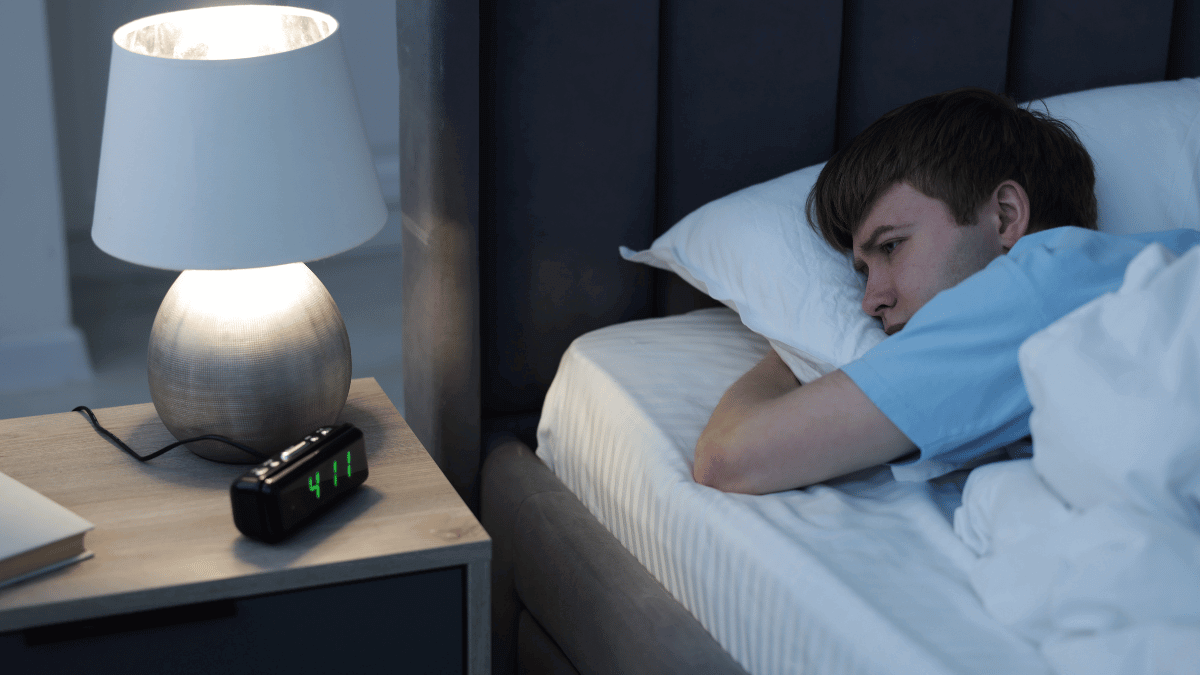
Sleep problems in men are more common than many people think, yet they often remain unspoken or underestimated. Many men struggle with falling asleep, staying asleep, or waking up feeling refreshed, even when they spend enough time in bed.
Over time, these issues quietly affect daily energy, mental clarity, emotional balance, and physical recovery.
Unlike occasional restless nights, ongoing sleep difficulties tend to follow recognizable patterns. Poor sleep in men is often linked to stress, mental overload, lifestyle habits, and gradual changes in sleep quality with age.
Because these problems develop slowly, they are frequently normalized and ignored until fatigue becomes part of everyday life.
Understanding sleep problems in men starts with recognizing that sleep is not just about hours spent in bed. Sleep quality, consistency, and recovery all play a role in how rested the body and mind feel the next day. This section explores what sleep problems look like in men and why they develop over time.
What Sleep Problems Look Like in Men
Male sleep issues do not always appear as severe or obvious disorders. In many cases, they show up as subtle disruptions that slowly become routine. Men may fall asleep quickly but experience light or broken sleep throughout the night. Others may wake up earlier than intended and struggle to return to sleep.
Sleep problems are not always about staying awake. Repeated interruptions can fragment rest and reduce recovery, a pattern commonly seen in sleep disruption in men, even when total sleep time appears adequate.
Difficulty staying asleep can significantly reduce sleep quality and recovery, a pattern explored in trouble sleeping at night, where fragmented sleep disrupts the body’s natural reset.
Common patterns include:
- Difficulty falling asleep despite feeling tired
- Waking up multiple times during the night
- Light, restless sleep
- Waking up tired even after several hours of sleep
- Feeling mentally foggy in the morning
These patterns often coexist, creating a cycle where sleep never feels fully restorative. Over time, the body adapts to functioning in a semi-fatigued state, making poor sleep feel “normal.”
Why Sleep Problems Are Often Ignored
One reason sleep problems in men persist is the tendency to push through fatigue. Many men prioritize responsibilities over rest, assuming sleep issues will resolve on their own. Caffeine, late-night screen use, and irregular schedules become coping mechanisms rather than solutions.
There is also a misconception that sleep problems must be extreme to matter. In reality, consistent poor sleep quality has a cumulative effect.
Even mild disruptions, when repeated night after night, can significantly affect energy, focus, and recovery.
Another factor is lack of awareness. Men often associate fatigue with workload or stress without recognizing sleep as the underlying issue. This disconnect delays meaningful changes and reinforces unhealthy sleep patterns.
The Role of Stress and Mental Load
Stress is one of the strongest contributors to sleep problems in men. Mental load does not disappear at bedtime; it often intensifies. Thoughts about work, finances, family responsibilities, or future planning keep the mind active when the body is ready to rest.
This mental overactivity interferes with the natural transition into sleep. The nervous system remains alert, making it harder to fall asleep or stay asleep. Even when sleep occurs, it tends to be lighter and more fragmented, reducing recovery.
Over time, stress-related sleep disruption becomes habitual. The bed itself may become associated with thinking and worrying rather than relaxation, further reinforcing the cycle.
Age, Lifestyle, and Sleep Quality
As men age, natural changes in sleep structure occur. Deep sleep becomes shorter, and lighter sleep stages become more frequent.
While this is normal, it makes sleep more sensitive to lifestyle factors such as irregular schedules, late meals, and reduced physical activity.
Modern routines often worsen this sensitivity. Two men can sleep the same number of hours and feel completely different the next day. The difference often comes down to sleep quality in men, which determines how deeply and consistently the body recovers overnight. Long hours indoors, limited daylight exposure, and sedentary habits weaken the body’s internal clock.
Without strong signals for daytime activity and nighttime rest, sleep becomes inconsistent and less restorative.
How Sleep Problems in Men Affect Daily Energy
Poor sleep rarely stays confined to the night. For men, its effects often become most visible during the day, shaping how the body moves, how the mind functions, and how daily responsibilities are handled.
When sleep quality is compromised, energy levels drop, mental clarity fades, and even simple tasks can feel more demanding than they should.
Unlike short-term tiredness, the fatigue caused by ongoing sleep problems tends to feel deeper and more persistent. Men may wake up already feeling drained, as if rest never truly happened. This section explores how poor sleep affects daily energy, focus, and overall performance, and why these effects accumulate over time.
How Poor Sleep Disrupts Daily Energy Levels
Energy is one of the first areas affected by poor sleep in men. Even after spending enough hours in bed, many men report feeling physically heavy or sluggish in the morning.
This lack of vitality is not always dramatic, but it creates a constant sense of low-level exhaustion that follows throughout the day.
Poor sleep interferes with the body’s ability to recharge overnight. Persistent low energy during the day is a common consequence of poor sleep, as explained in poor sleep and low energy in men, where recovery never fully supports daily demands. Instead of waking up refreshed, the body remains in a partially fatigued state. Muscles may feel slower to respond, and physical effort requires more energy than usual.
Over time, this leads to reduced stamina and a lower tolerance for physical activity.
Common signs of low daily energy linked to poor sleep include:
- Feeling tired shortly after waking up
- Needing caffeine to function normally
- Energy crashes in the afternoon
- Feeling physically drained without clear exertion
These patterns often become normalized, masking the role sleep plays in persistent fatigue.
The Relationship Between Sleep Quality and Focus
Mental focus relies heavily on sleep quality. When sleep is light or fragmented, the brain does not complete its normal recovery process. As a result, concentration becomes harder to maintain, and attention drifts more easily.
Men experiencing sleep problems often describe a sense of mental fog. Many men describe a sense of mental fog linked to mental fatigue from poor sleep in men, which can slow thinking, reduce attention, and make even familiar tasks feel mentally taxing. Thoughts feel slower, memory recall becomes less reliable, and multitasking feels overwhelming. This reduced cognitive efficiency affects work performance, decision-making, and problem-solving abilities.
Sleep-related focus issues may show up as:
- Difficulty concentrating for long periods
- Forgetfulness or mental lapses
- Slower reaction times
- Increased distractibility
These effects are subtle at first but become more noticeable as poor sleep continues. Over time, mental fatigue compounds, making even familiar tasks feel mentally taxing.
Productivity and Performance Under Sleep Deprivation
Poor sleep does not just affect how tired a man feels; it directly influences how effectively he performs daily tasks. When sleep deprivation becomes consistent, daily performance begins to decline quietly.
Reaction time slows, mental endurance drops, and tasks require more effort, reflecting the deeper connection between sleep deprivation and performance in men. Productivity declines when energy and focus are compromised, leading to longer completion times and increased errors.
Men may find themselves working harder to achieve the same results they once did with ease. This creates frustration and can lead to longer working hours, which further reduces time available for rest and recovery. The cycle reinforces itself, making sleep problems increasingly difficult to escape.
In professional and personal contexts, poor sleep can affect:
- Work efficiency and output
- Decision-making quality
- Emotional control in stressful situations
- Motivation to pursue long-term goals
Over time, this decline in performance can impact confidence and self-perception, especially for men who value productivity and reliability.
Emotional Balance and Daily Stress Tolerance
Sleep plays a critical role in emotional regulation. When sleep quality is low, emotional responses tend to become more intense and less controlled. Men may feel more irritable, impatient, or easily overwhelmed by situations that previously felt manageable.
Poor sleep reduces the brain’s ability to process stress effectively. Daily challenges feel heavier, and recovery from emotional strain takes longer. This heightened stress sensitivity can strain relationships and increase feelings of frustration or burnout.
Emotional effects linked to poor sleep often include:
- Increased irritability
- Reduced patience
- Heightened stress responses
- Difficulty relaxing during downtime
These changes are often misattributed to personality or external pressure, rather than recognized as consequences of ongoing sleep disruption.
The Illusion of “Functioning Fine”
One of the most challenging aspects of sleep problems in men is the illusion of adaptation. Many men believe they are functioning well despite poor sleep because they continue to meet responsibilities. In reality, the body and mind are operating below optimal capacity.
This adaptation masks the true cost of poor sleep. Energy levels, focus, and emotional balance may all be reduced compared to their potential, yet the gradual nature of decline makes it hard to notice. Over time, this baseline of fatigue becomes accepted as normal.
Recognizing this illusion is a crucial step toward understanding the importance of sleep quality. Feeling “okay” is not the same as being fully rested or recovered.
How Poor Sleep Accumulates Over Time
The effects of poor sleep are cumulative. One restless night may not have a significant impact, but repeated nights of disrupted sleep gradually erode physical and mental resilience. Each night of inadequate recovery adds to the overall fatigue load.
Some men wake up tired despite sleeping through the night. This experience is often linked to non-restorative sleep in men, where sleep occurs but fails to deliver meaningful recovery to the body and mind.
This accumulation explains why men often feel increasingly tired over weeks or months, even if sleep duration does not change. The body never fully resets, leading to chronic low energy and reduced performance.
Understanding this long-term accumulation helps explain why improving sleep requires consistency rather than quick fixes. Recovery is a process that unfolds over time as sleep quality improves.
How Sleep Problems Affect Physical and Mental Recovery
One of the most noticeable effects of disrupted sleep is persistent morning fatigue. Many men wake up feeling exhausted despite spending enough hours in bed, a pattern explained in more detail in our guide on why men wake up tired after sleep, which explores how incomplete overnight recovery affects daily energy.
Recovery is the hidden function of sleep. While sleep is often associated with rest, its deeper role lies in restoring both the body and the mind after daily demands. For men experiencing ongoing sleep problems, recovery becomes incomplete.
The body may rest, but it does not fully reset, leading to lingering fatigue and reduced resilience over time. Some men sleep enough hours yet wake up feeling unchanged. This often points to sleep recovery problems, where rest occurs without fully restoring energy, focus, or resilience.
Sleep problems in men interfere with recovery in ways that are not always immediately obvious. Physical strength, mental clarity, and emotional balance all depend on consistent, high-quality sleep.
When this process is disrupted, the effects gradually accumulate, shaping how the body feels and how the mind responds to stress.
Physical Recovery and the Cost of Poor Sleep
Physical recovery depends heavily on uninterrupted, restorative sleep. During the night, the body carries out essential maintenance processes that support muscle repair, tissue renewal, and overall physical balance. When sleep is light or fragmented, these processes become less efficient.
Men with poor sleep often notice that their bodies feel slower to recover from physical effort. Even routine activities can lead to lingering soreness or a sense of heaviness. Over time, this reduces physical confidence and may discourage movement or exercise, which further affects sleep quality.
Common physical recovery issues linked to poor sleep include:
- Persistent muscle fatigue
- Slower recovery after physical activity
- General body stiffness or heaviness
- Reduced physical endurance
These effects are subtle at first, but they compound when sleep disruption becomes chronic.
Sleep and the Body’s Repair Cycle
The body follows a natural repair cycle that aligns with sleep stages. Deep sleep, in particular, plays a central role in physical restoration. When deep sleep is shortened or interrupted, the body does not complete its full repair sequence.
For men, this incomplete recovery often feels like starting each day with a physical deficit. The body may function, but it does so with reduced efficiency. Over time, this can lead to a constant sense of physical weariness, even in the absence of intense physical strain.
Irregular sleep schedules further disrupt this repair cycle. When bedtime and wake-up times vary significantly, the body struggles to anticipate rest, making recovery less predictable and less effective.
Mental Recovery and Cognitive Reset
Mental recovery is just as important as physical recovery, yet it is often overlooked. Sleep provides the brain with an opportunity to process information, regulate emotions, and reset cognitive systems. When sleep quality is poor, this mental reset remains incomplete.
Men experiencing sleep problems frequently report mental exhaustion that feels different from ordinary tiredness. Thoughts feel heavier, decision-making becomes slower, and mental flexibility decreases. This cognitive fatigue affects problem-solving, creativity, and emotional control.
Signs of reduced mental recovery include:
- Difficulty focusing for extended periods
- Reduced mental sharpness
- Increased mental fatigue during the day
- Feeling mentally “drained” without clear cause
These symptoms often coexist with physical fatigue, reinforcing the sense of overall exhaustion.
Emotional Recovery and Stress Regulation
Sleep plays a crucial role in emotional recovery. During healthy sleep, the brain processes emotional experiences and regulates stress responses. Poor sleep disrupts this process, leaving emotional tension unresolved.
Men with ongoing sleep problems often experience heightened emotional reactivity. Stress feels more intense, patience decreases, and emotional recovery from daily challenges takes longer. This reduced stress tolerance can affect relationships, work interactions, and overall mood stability.
Emotional strain caused by poor sleep may appear as:
- Increased irritability
- Difficulty relaxing
- Heightened sensitivity to stress
- Reduced emotional resilience
These changes are not personality traits; they are signs that emotional recovery is incomplete.
The Connection Between Sleep, Recovery, and Motivation
Motivation is closely tied to recovery. When the body and mind are well-rested, motivation tends to follow naturally. Poor sleep disrupts this balance, making effort feel heavier and goals feel more distant.
Men dealing with sleep problems often report a gradual decline in drive. Activities that once felt engaging may start to feel burdensome. This loss of motivation is not a lack of discipline, but a reflection of depleted recovery reserves.
Over time, reduced motivation can lead to avoidance behaviors, such as postponing tasks or withdrawing from activities that require energy. This further reduces physical and mental stimulation during the day, which can worsen sleep quality at night.
Why Recovery Cannot Be “Caught Up” Later
A common misconception is that recovery can be postponed or compensated for later. Many men attempt to recover from poor sleep by sleeping longer on weekends or taking extended breaks. While this may provide temporary relief, it does not fully restore the body’s natural recovery rhythm.
Recovery depends on consistency. Irregular sleep patterns confuse the body’s internal clock, making it harder to achieve deep, restorative sleep. As a result, attempts to “catch up” often fall short, leaving underlying sleep problems unresolved.
True recovery requires regular, high-quality sleep rather than occasional extended rest. Understanding this principle is essential for breaking long-term sleep disruption patterns.
The Long-Term Impact of Incomplete Recovery
When physical and mental recovery remain incomplete over long periods, the effects become more pronounced. Energy levels decline, stress tolerance decreases, and overall quality of life suffers. Men may feel as though they are constantly operating below their potential.
This long-term recovery deficit often goes unnoticed because it develops gradually. However, recognizing the signs early allows men to address sleep problems before they significantly affect health, performance, and well-being.
Breaking the Cycle: Improving Sleep and Recovery Naturally
Breaking the cycle of sleep problems in men does not require extreme measures or overnight changes. In most cases, improvement comes from restoring balance and consistency rather than forcing sleep. When sleep is approached as part of a broader recovery system, small adjustments can gradually lead to meaningful and lasting change.
This section focuses on practical, natural ways men can support better sleep and recovery without medical claims or quick fixes. The goal is not perfection, but progress.
Understanding Sleep as a Recovery Process
Sleep is not an isolated event that begins at bedtime. It reflects how the body and mind have been treated throughout the day. Stress exposure, mental stimulation, physical activity, and routine consistency all influence how easily sleep arrives and how restorative it becomes.
Many men focus only on nighttime habits while ignoring daytime behaviors that shape sleep quality. Recovery starts long before getting into bed. When daily rhythms are aligned, sleep becomes a natural extension of recovery rather than a struggle.
This perspective shift is essential. Sleep improves when the body feels safe, balanced, and ready to rest.
Restoring Consistency to Support Sleep Quality
Consistency is one of the most powerful tools for improving sleep problems in men. The body relies on predictable patterns to regulate energy and recovery. Irregular schedules weaken these signals, making sleep lighter and less reliable.
Key areas where consistency matters most include:
- Regular sleep and wake times
- Stable meal timing
- Consistent exposure to daylight
- Predictable daily routines
These patterns help reinforce the body’s internal clock. Over time, falling asleep becomes easier, and sleep depth improves naturally.
Reducing Mental Stimulation Before Sleep
Mental overstimulation is a major barrier to restful sleep. Many men carry unresolved thoughts into the night, keeping the nervous system alert when it should be slowing down. Creating a clear mental transition from day to night allows the mind to disengage gradually.
Helpful strategies include:
- Reducing screen exposure in the evening
- Avoiding mentally demanding tasks late at night
- Creating a short wind-down routine
- Allowing time to mentally “close” the day
The goal is not to eliminate thinking, but to reduce intensity. When mental activity decreases, the body can enter sleep more smoothly.
Supporting Physical Readiness for Sleep
Physical activity plays a supportive role in sleep and recovery. Movement during the day helps regulate energy levels and promotes natural sleep pressure at night. However, timing and intensity matter.
Moderate physical activity earlier in the day supports better sleep quality. Excessive stimulation late in the evening can have the opposite effect. Finding balance helps the body recognize when it is time to be active and when it is time to rest.
Physical readiness for sleep also involves comfort. A calm, familiar sleep environment reinforces the body’s association between bed and rest, making sleep more consistent over time.
Managing Stress Without Forcing Relaxation
Stress cannot always be eliminated, but it can be managed. For men with sleep problems, the goal is not to force relaxation, but to reduce accumulated stress before bedtime. When stress is processed during the day, it is less likely to surface at night.
Simple stress-management practices include:
- Creating mental boundaries between work and rest
- Allowing moments of stillness during the day
- Avoiding constant stimulation
- Recognizing when mental overload is building
These practices reduce the overall stress load, making sleep more accessible and recovery more complete.
Rebuilding Trust in Sleep
One of the less discussed aspects of sleep problems in men is loss of trust in sleep itself. After repeated poor nights, bedtime can become associated with frustration or worry. This emotional association makes sleep harder to achieve.
Rebuilding trust in sleep takes time. It involves shifting focus away from sleep performance and toward consistent habits. Letting go of pressure allows sleep to return gradually, without force.
Patience is essential. Recovery unfolds over weeks, not nights.
When Improvement Becomes Noticeable
As sleep quality improves, changes often appear subtly at first. Men may notice slightly better morning energy, improved focus, or reduced irritability. These small improvements signal that recovery processes are beginning to normalize.
Over time, these changes accumulate. Energy becomes more stable, mental clarity improves, and daily demands feel more manageable. Sleep problems in men rarely disappear suddenly, but steady progress leads to meaningful improvement.
Practical Ways to Address Sleep Problems in Men
Sleep problems can affect daily functioning, mood, and overall well-being. While addressing the root causes often requires lifestyle adjustments, the following practical strategies may help support healthier sleep:
- Establish a consistent sleep schedule: Going to bed and waking up at the same time each day helps regulate the body’s internal clock.
- Create a relaxing sleep environment: A cool, dark, and quiet bedroom supports uninterrupted rest.
- Limit evening screen exposure: Reducing time on phones or laptops before bed helps the mind unwind.
- Engage in regular physical activity: Exercise earlier in the day supports sleep readiness at night.
- Practice stress-relieving techniques: Deep breathing, meditation, or gentle stretching can calm the nervous system before bedtime.
These practices are general well-being habits and not medical treatments, but they may help support better sleep when used regularly.
This article is for educational and informational purposes only and does not constitute medical advice, diagnosis, or treatment. Sleep problems can vary in causes and severity across individuals. If your sleep difficulties persist or significantly impact your daily life, please consult a qualified healthcare professional for personalized evaluation and guidance.
Sources
For reliable information on sleep issues, quality, and health effects, refer to the following trusted resources:
- National Institute of Mental Health – Sleep and Mental Health
- Mayo Clinic – Sleep Disorders and Management
- Sleep Foundation – Sleep Problems and Solutions
Conclusion
Sleep problems in men often develop through a combination of stress, lifestyle habits, and gradual changes in recovery patterns. Poor sleep affects energy levels, mental clarity, emotional balance, and physical recovery, making daily demands feel heavier over time. Improving sleep requires consistency, awareness, and patience rather than quick fixes.
To better understand how sleep connects with daily energy, fatigue, and overall performance, explore our main guide on energy and fatigue patterns in men, which explains how these systems influence each other over time.
By viewing sleep as part of a broader recovery system, men can begin to rebuild healthier routines that support long-term energy, focus, and well-being.
Written by Better Men Life Editorial Team
This article was prepared by the Better Men Life editorial team, focusing on men’s sleep health, lifestyle balance, and overall well-being. Our content is intended for informational purposes and is supported by reputable health sources and publicly available research.